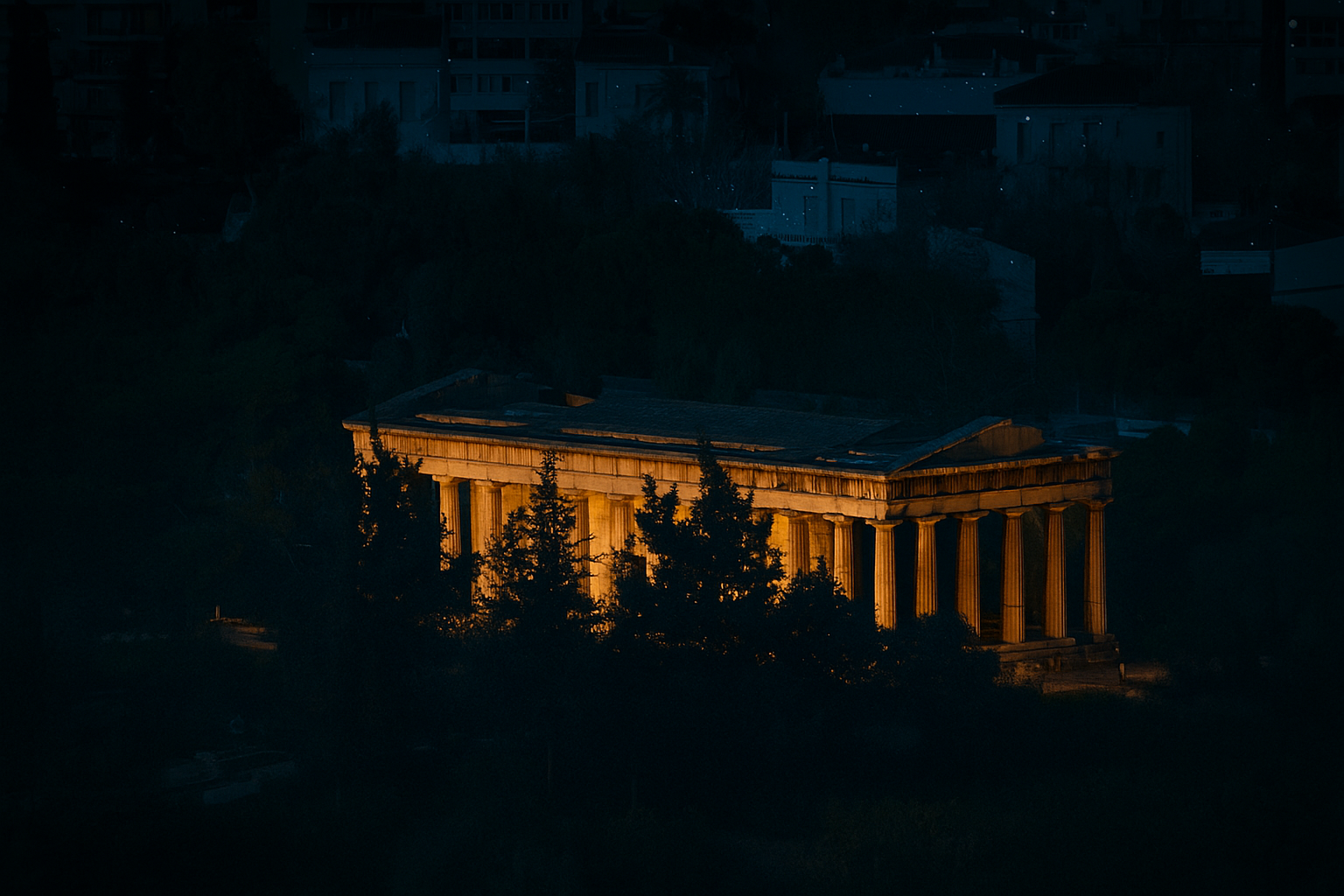

Tucked atop the gentle rise of Agoreos Koronos Hill in Athens lies one of Greece’s best-preserved ancient treasures: the Temple of Hephaestus. Often overshadowed by the glittering Acropolis, this classical gem offers visitors a quieter, more intimate connection to Athens’ rich past, standing as a testament to both divine reverence and the city’s architectural genius.
A Sanctuary for Fire, Wisdom, and Craftsmanship
Built around 450 BC during Athens’ golden age, the Temple of Hephaestus was dedicated to Hephaestus, the Olympian god of fire and craftsmanship, and Athena, goddess of wisdom, strategy, and crafts. Its location wasn’t random. Perched above the Ancient Agora, the hill once served as a gathering spot for the city’s artisans, a homage to the very skills that Hephaestus himself celebrated.
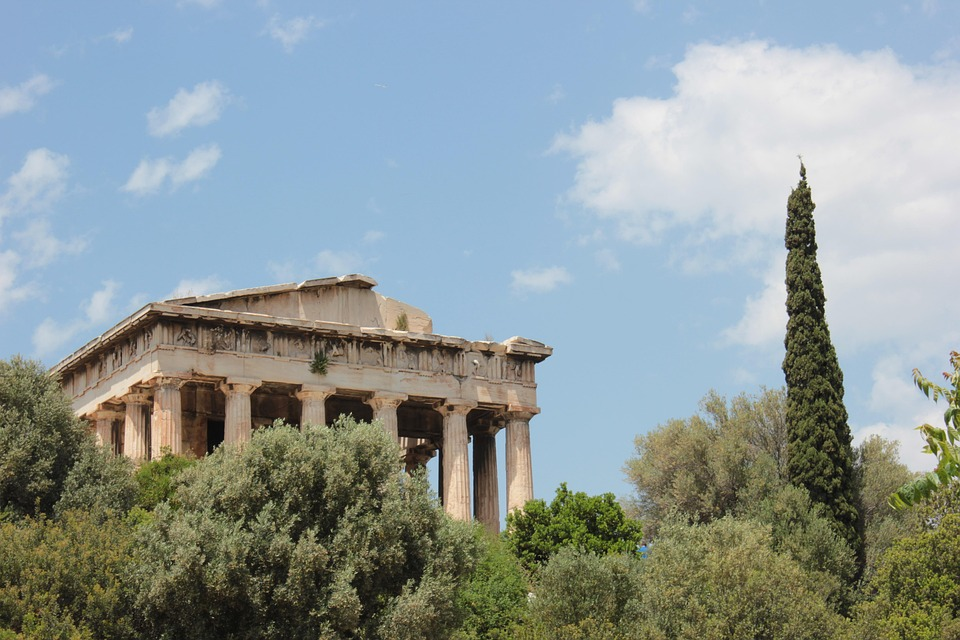
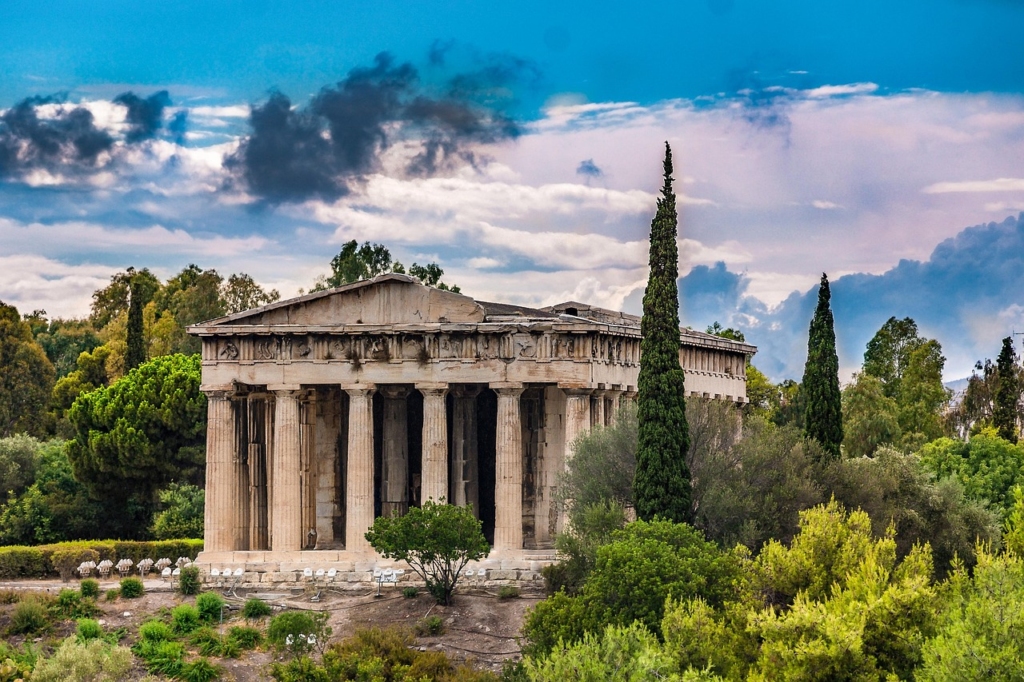
Designed by Iktinus, the brilliant mind behind the Parthenon, the temple is a quintessential example of Doric architecture. Its sturdy yet elegant columns, six on the shorter east and west sides, thirteen along the longer north and south sides, encase a centrally enclosed cella, forming a peripteral layout that has inspired architects for centuries.
Stories made out of Stone
Though time and earthquakes have weathered many of its intricate friezes, the temple still tells stories of mythic grandeur. On the eastern front, sculptures depict the heroic labors of Hercules and the battle of Theseus against the Pallentides, while the western friezes capture the dramatic fall of Troy. The temple’s cella, pronaos (front porch), and opisthodomos (back porch) were all built with Pentelic marble, with Parian marble reserved for its statues, a combination of materials befitting a monument of divine importance.
From Sacred Temple to Modern Treasure
Through centuries of transformation, the temple has worn many hats. From the 7th century AD until 1834, it served as an Orthodox church dedicated to Saint George. It even hosted a royal doxology in 1834 to commemorate King Otto’s arrival and Athens’ designation as the Greek capital. Following this, the building became a museum, a role it held until 1937, preserving its legacy for generations of visitors. Today, it stands proudly as one of Greece’s greatest ancient monuments, a quiet witness to millennia of history.
Finding your way to the temple
Visiting the Temple of Hephaestus is simple, no matter your mode of transport.
On Foot: From Thissio or Monastiraki metro stations, it’s less than a 10-minute stroll.
By Metro: The closest stations are Thissio (Green Line) and Monastiraki (Green & Blue Lines).
By Bus/Trolleybus: Hop off at the “Monastiraki” stop.
Private Transfers: For seamless convenience, pre-booked taxis, minibuses, or VIP cars can pick you up directly from the airport, port, or your hotel.
A history buff or an architecture enthusiast? The Temple of Hephaestus opens the way to a past worth to imagine. As you view its marble columns and trace the stories etched into its friezes, it’s impossible not to feel a connection to the hands that built it, the myths that inspired it, and those who outlived everything through this place.
Leave a Reply